
Raising Water Consciousness through
World’s Biggest Photo Exhibition and
Largest collection of Photo Stories on Water
Photo Stories | Drinking Water A story based on the theme of World Water Day 2026
Jal Jeevan Mission through the Gender Lens: Reflections from Jharkhand
Nandita Singh and Om Prakash Singh
22 March, 2026
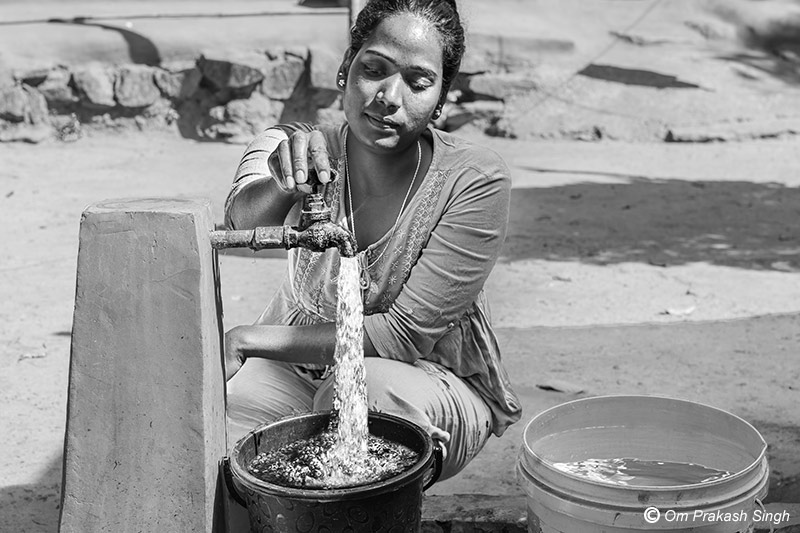
In rural India, access to drinking water has long been shaped by gendered roles, with women and girls primarily responsible for collecting and managing water. Their daily trips to distant sources demand substantial time and physical effort, affecting their health, safety, education, livelihoods, and social participation. The Jal Jeevan Mission (JJM), launched by the Government of India in 2019, represents an important milestone in addressing these challenges through the provision of Functional Household Tap Connections (FHTCs) to every rural household. Its vision is to ensure an adequate, safe, and affordable drinking water supply on a regular, long-term basis, improving rural living conditions, keeping women and girl children at the center. Among JJM’s four measurable outcomes, two directly concern gender: reducing women’s drudgery—thus freeing time for income and social engagement—and lowering dropout rates among upper primary school girls who are often tasked with fetching water. These aims align closely with Sustainable Development Goal (SDG) 6 on universal drinking water access, and SDG 5, which calls for ending gender discrimination, valuing unpaid domestic work, and supporting women through public services and infrastructure. Importantly, JJM extends beyond infrastructure by promoting women’s leadership in village water governance. It mandates at least 50% representation of women in Village Water and Sanitation Committees (VWSCs) and the training of five women in each village for water quality monitoring. This supports SDG target 5.5 on ensuring women’s effective participation and equal opportunities for leadership at all levels of decision-making in political, economic and public life. Since 2019, rural tap water coverage in India has risen from 18.3% to over 81%, driven by installation of more than 158 million new FHTCs. With women constituting nearly half of the country's rural population, this expansion has vast implications for their well being as beneficiaries. Coupled with their growing role in governance across nearly 600,000 villages, the potential for gender equality and empowerment through JJM is substantial. Against this backdrop, this photo article investigates how JJM’s gender-sensitive approach is unfolding on the ground. It draws on empirical evidence from Jharkhand—one of India’s lowest ranked states on development indicators such as Human Development Index (HDI), Gender Development Index (GDI) and Gender Inequality Index (GII). Here JJM aims to provide FHTCs to 6.3 million rural households in 29,398 villages, a quarter of which are predominantly tribal. Since 2019, Jharkhand’s FHTC coverage has increased from a mere 5.5% to 55.2%, with 6,961 villages achieving full coverage. The study explores how the mission’s implementation in the state can potentially advance gender equality through women’s involvement in JJM-based water governance in the villages, promoting improved water access for themselves and their families, in turn, leading to more equitable and sustainable society. The title photograph captures the convenience brought by JJM to a rural young lady in Khunti district, enabling her access to uninterrupted water supply at home every day.
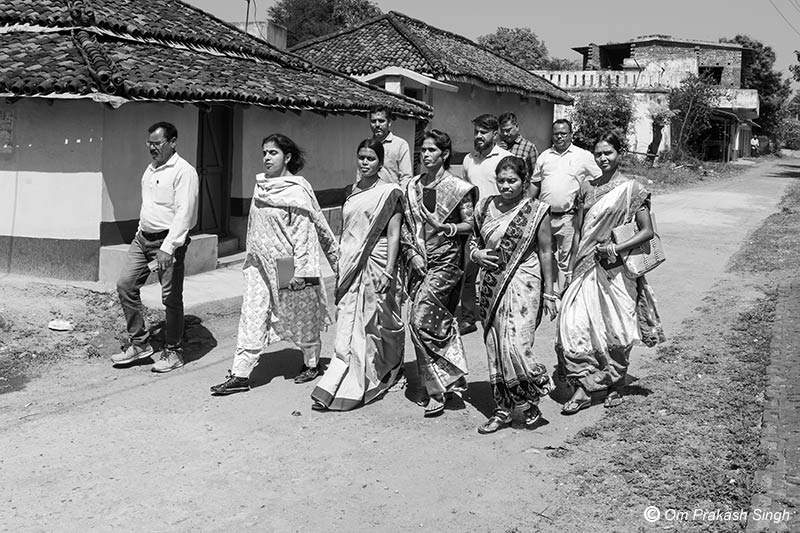
Women VWSC members marching ahead to show a JJM scheme to one of the authors in Seraikela Kharsawan district
JJM has great potential to support action for reaching the SDGs, provided rural women actively take up responsibilities in the formal governance structure of JJM at grassroots level, as well as engage informally in different capacities within the local context of their families and communities. The above photo symbolizes the enthusiasm and shared responsibility undertaken by the emerging women leadership in one of the JJM villages. These women are members of the local VWSC. The men seen in the group include the Mukhiya of the Gram Panchayat (head of the village local government) who is also a VWSC member, and functionaries of the Drinking Water and Sanitation Department, Government of Jharkhand.
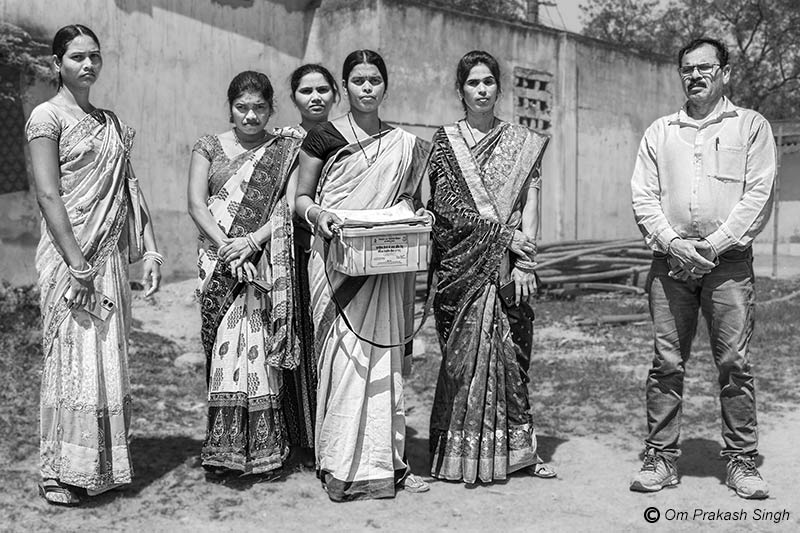
Some women members of a VWSC, together with a male counterpart in a village in Seraikela-Kharsawan district
The formal governance structure of JJM at grassroots level is the VWSC which is responsible for implementing JJM in the village. In Jharkhand, this is a 12 member body that comprises Gram Panchayat representatives and other community members, with the Jal Sahiya — grassroots ‘woman water facilitator’—serving as a key member and treasurer. 50% of the VWSC members must be women which is seen as a key to JJM success in the village. The VWSC is tasked with planning, executing and overseeing the operation and maintenance of village drinking water supply systems to ensure their effective and sustainable functioning. Regular Gram Sabhas (meetings of the ‘village council’ which comprises all the village voters) are convened to strengthen community participation, with particular emphasis on enhancing women’s involvement and ownership in local water governance.
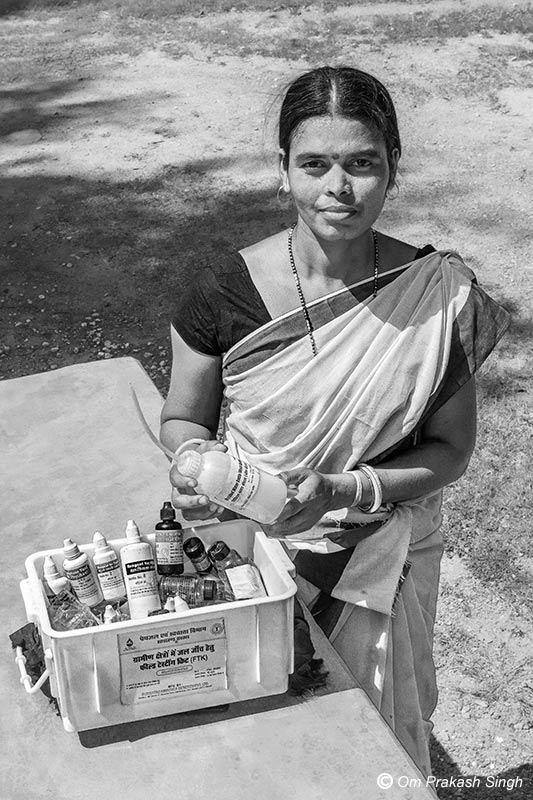
A Jal Sahiya demonstrates the field test kit that she uses for village drinking water quality monitoring in Seraikela Kharsawan district
In Jharkhand, the Jal Sahiya is a key woman functionary who links JJM with the village community, leading awareness efforts, identifying households for FHTC connections, facilitating installations, and maintaining records. She is selected by the Gram Sabha (village council) from among village women, giving her formal community legitimacy. She is trained in minor repairs and water quality testing and receives an honorarium of Rs. 2,000 per month. Alongside her, five women in each village are trained to conduct drinking water tests, placing women at the forefront of the Water Quality Monitoring and Surveillance (WQMS) system. Their testing forms the first tier of JJM’s water safety checks, expanding women’s technical, managerial, and community leadership.
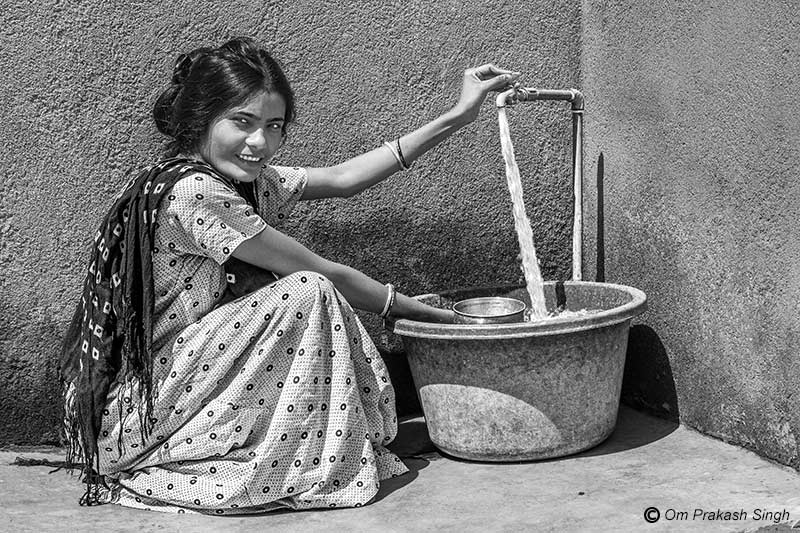
A rural lady happily managing her household chores using the JJM water supply in her courtyard in Seraikela Kharsawan district
An FHTC should provide a minimum of 55 liters per capita per day (lpcd) potable water round-the-year on a daily basis. A reliable water supply inside the domestic premises saves hours of daily labor otherwise spent by rural women fetching water from distant sources. This reduces physical strain, while enabling them to easily access clean water for cooking, washing utensils, cleaning the house, bathing children and dependents, and maintaining kitchen and personal hygiene. This convenience allows them to manage household chores more efficiently, improving health, dignity, and overall quality of life.
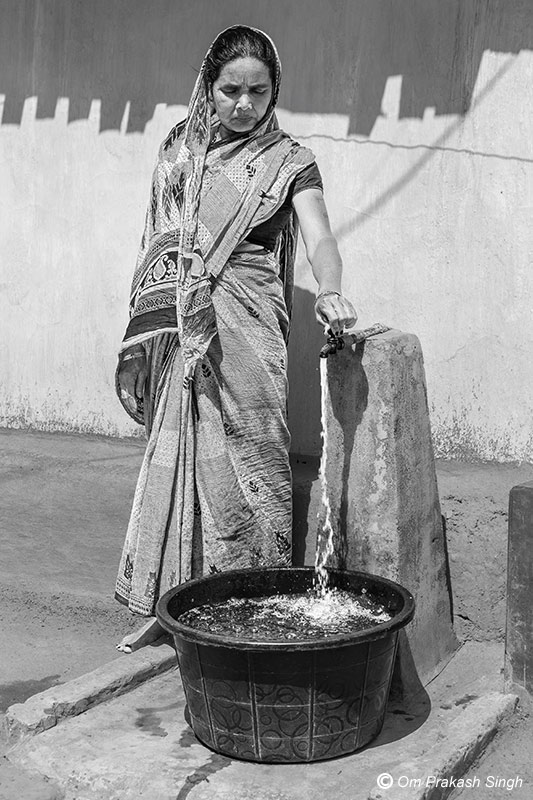
Collecting water from an FHTC located just outside the domestic premises in Seraikela-Kharsawan district
When courtyard space is limited, a JJM tap may be installed just outside the premises, ensuring that women and their families still enjoy close access to clean water. For women, this nearby source eases the effort needed for everyday tasks—whether cooking, washing utensils, cleaning, or caring for children. Even with the tap placed outdoors, the shorter distance and reliable flow help streamline their domestic routines, reducing physical strain and supporting better health, hygiene and well-being.
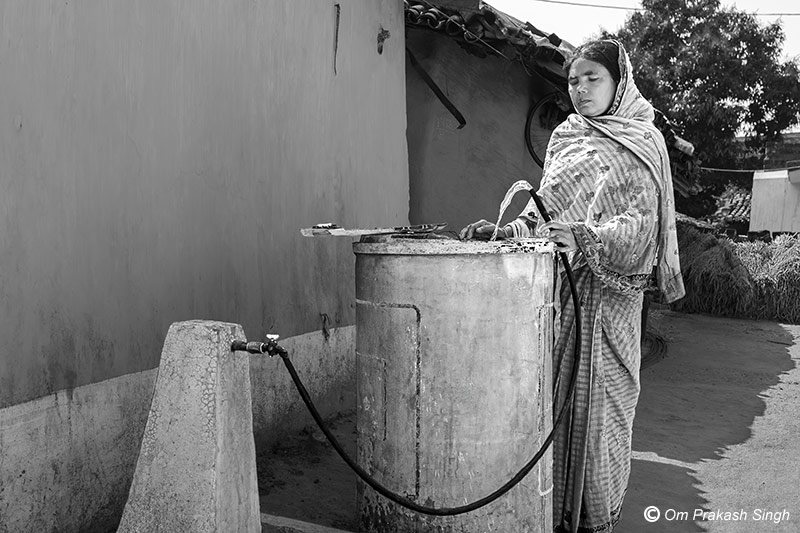
A rural woman fills her domestic water tank with JJM tapwater in Seraikela Kharsawan district
In many villages, JJM tap water arrives at fixed hours, making home storage vital for dependable daily use. By filling a courtyard tank directly from the tap, women can gain control over when and how to manage their domestic chores. With safe water stored for later use, cooking, cleaning, and caregiving continue uninterrupted even after supply hours are over. This reduces the physical strain of fetching water repeatedly from distant sources and brings welcome predictability to their routine — a simple change that meaningfully lightens women’s everyday responsibilities.
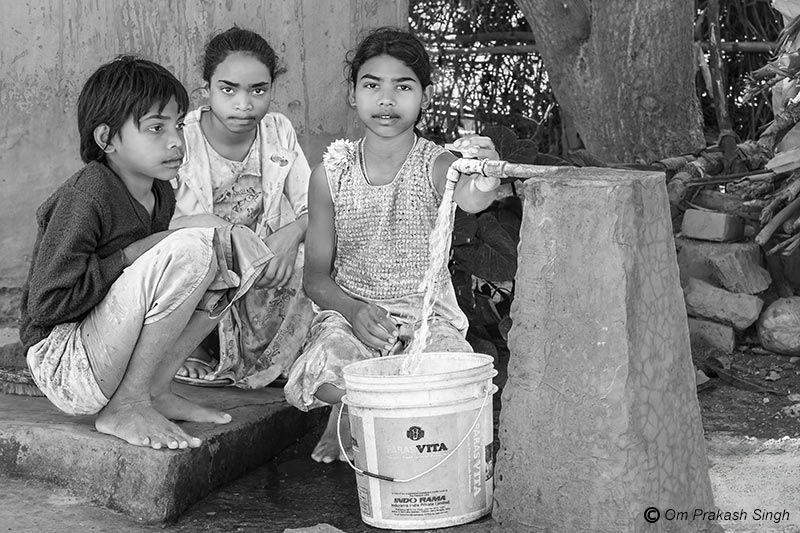
Girl children fetching water from an FHTC in Seraikela-Kharsawan district
With JJM tap water available at home, young girls are freed from the daily burden of fetching domestic water from distant sources—a task that often kept them away from school or left them tired before classes. The time saved allows them to attend school regularly, study more, and also participate in play and extracurricular activities, which is equally important for all-round development of children. Reliable water at home also improves hygiene, supporting better health and confidence. By easing routine burdens, JJM thus enables girl children to focus on learning, growth, and future opportunities.
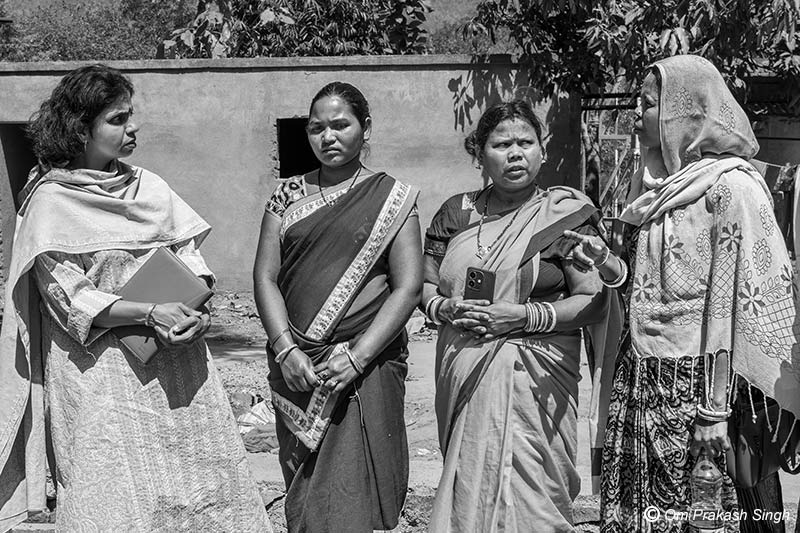
Women confidently articulating their JJM-related service needs and challenges in a settlement inhabited by a Particularly Vulnerable Tribal Group (PVTG) in Seraikela-Kharsawan district
With water traditionally managed by women at home, JJM offers a natural platform for them to speak up on issues they understand well. As they join water committees, attend meetings, take part in monitoring, and use the JJM facilities daily, their experience gives them the confidence to raise concerns and influence decisions. This involvement makes women more vocal, assertive, and visible in community spaces, strengthening their leadership. Such change is evident even in a PVTG hamlet as shown above, where women as water users join the local Jal Sahiya to discuss their JJM related needs and challenges with one of the authors.
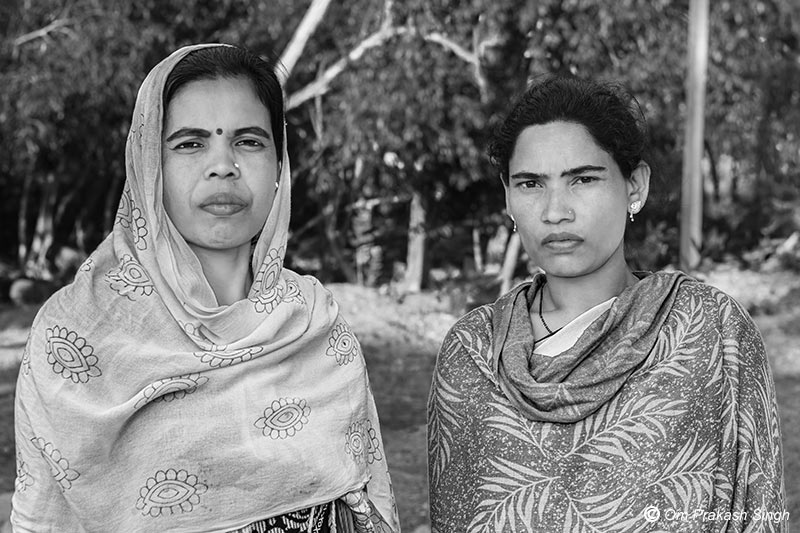
Women leaders of a VWSC who helped pioneer an innovative solution in their JJM scheme in Seraikela-Kharsawan district
Since women are the primary users of JJM schemes, their leadership significantly helps improve how the schemes work by ensuring that user priorities and needs are integrated. A clean water tank is seen as an important prerequisite for its adoption as drinking water source. However, this aspect has not been specifically addressed in the design of JJM schemes in Jharkhand. The above photo presents the lady Mukhiya (head of Gram Panchayat) with the Jal Sahiya on her left, who together addressed the shortcoming by advising the contractor to pioneer an innovative solution for keeping the overhead water tank clean, as described in the next photo.
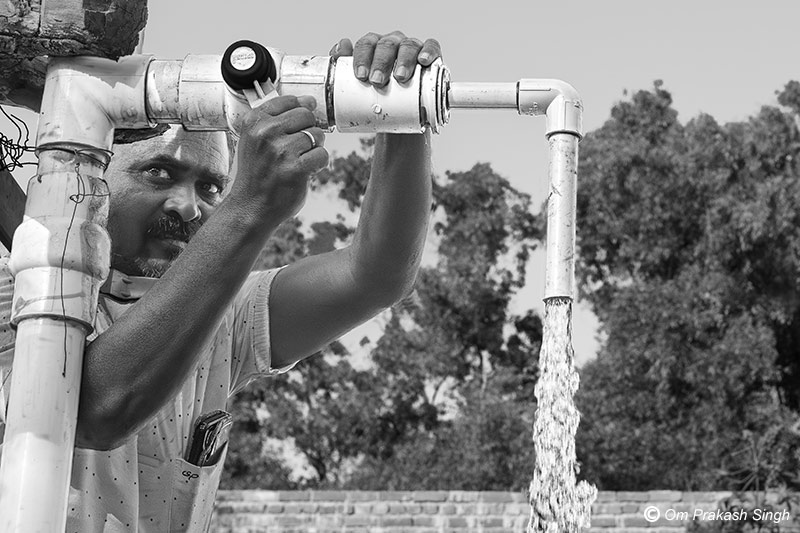
An innovative women-led solution for cleaning the JJM water tank in Seraikela-Kharsawan district
Women’s leadership can play a key role in introducing practical improvements to JJM schemes. In the instance referred above, VWSC women leaders guided a simple but effective design change in a JJM water system. Their suggestion enabled the overhead tank to be first rinsed using the regular incoming water flow, which was later flushed out through a specially added outflow pipe, which is seen in the above photo. Once implemented, this design modification improved tank hygiene and restored community trust in using the water for drinking—previously rejected due to cleanliness concerns. This example shows how women’s active involvement can strengthen community systems and drives better, user responsive design in JJM projects.
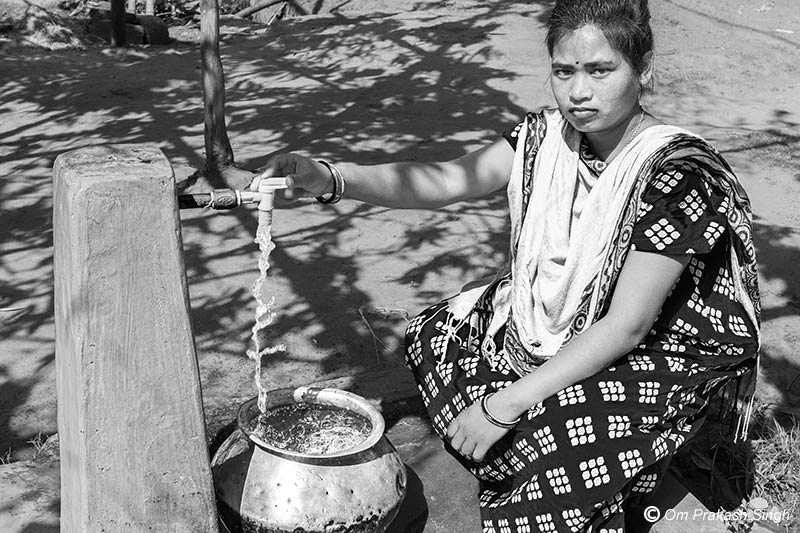
Woman-led minor repair ensures steady drinking water supply in a rural household in Gumla district
Taps installed under JJM are used heavily every day, which easily leads to their early wear and tear. When the tap in this household broke after long use, the family chose to replace it at their own cost instead of abandoning it. This happened because the woman in the photo encouraged her husband to invest in this small repair. This simple initiative has set an example in the woman’s neighborhood and prepared other women to act similarly, instead of falling back upon their distant water sources. This example shows how women’s active involvement as daily users of JJM facilities can also immensely help strengthen the sustainability of the program.
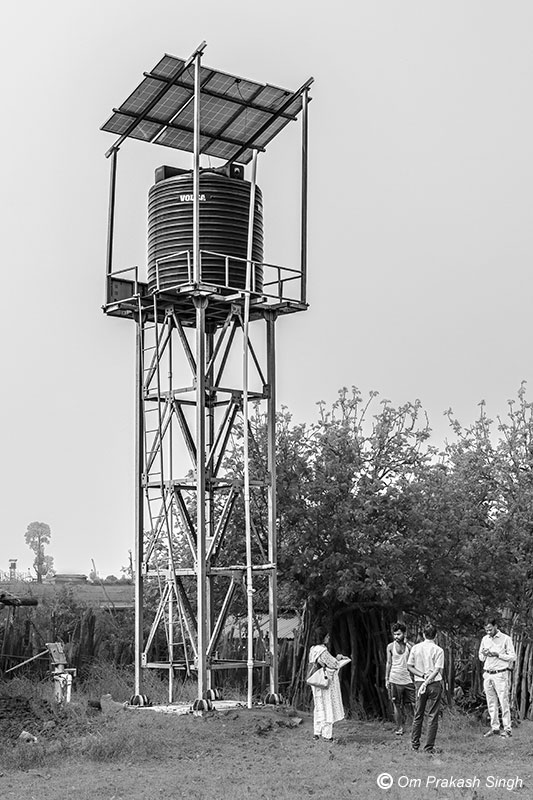
A user-managed JJM scheme in a PVTG habitation in Latehar district
As main users of the JJM schemes, women are a great power to lead their communities as stewards of their own systems. In this PVTG-dominated habitation, the solar pump powering the groundwater-based scheme has stopped working twice since its inception. However, local women, who rely on the system for fulfilling their daily water needs, urged their community to take timely action. Their persistence led to quick repairs with self-funding, leading to restoration of the water supply. This case highlights yet another example of how women’s active role as primary users of JJM facilities can strengthen system upkeep and long-term reliability.
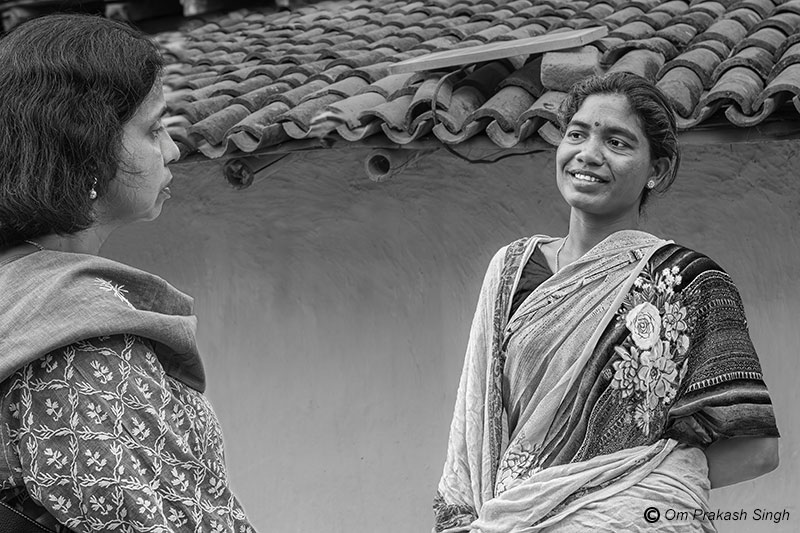
A tribal woman describing her satisfaction with the JJM outcomes for herself and her family in Gumla district
With JJM providing safe and reliable drinking water at home, the daily burden of water collection for rural women has greatly eased. This reduction in physical drudgery supports better health, lowers the risk of injury, and frees time for other responsibilities without overwhelming them. Women can now devote greater attention to their roles as caregivers and homemakers, participate more actively as economic partners, and take on stronger positions within community leadership.
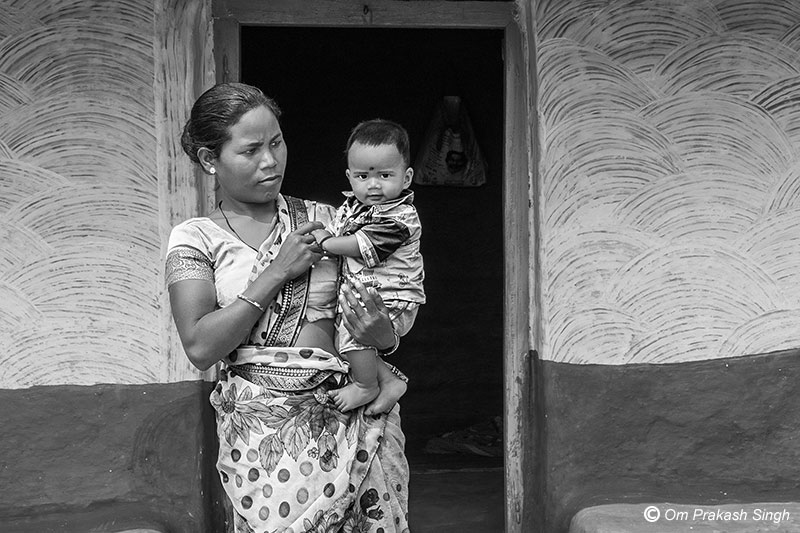
A PVTG woman beneficiary utilizing her saved time in childcare in Latehar district
A key role strengthened by JJM is women’s responsibility as mother and caregiver. With more time and smoother daily routines, women can now devote greater attention to their children and support them more effectively. Safe, reliable tap water from JJM schemes also protects families from water borne illnesses, improving both women’s and children’s health. Together, these gains support children’s growth, well being, and education. For women, this represents real empowerment—enabling them to care for their families more confidently and contribute to a stronger, healthier community.
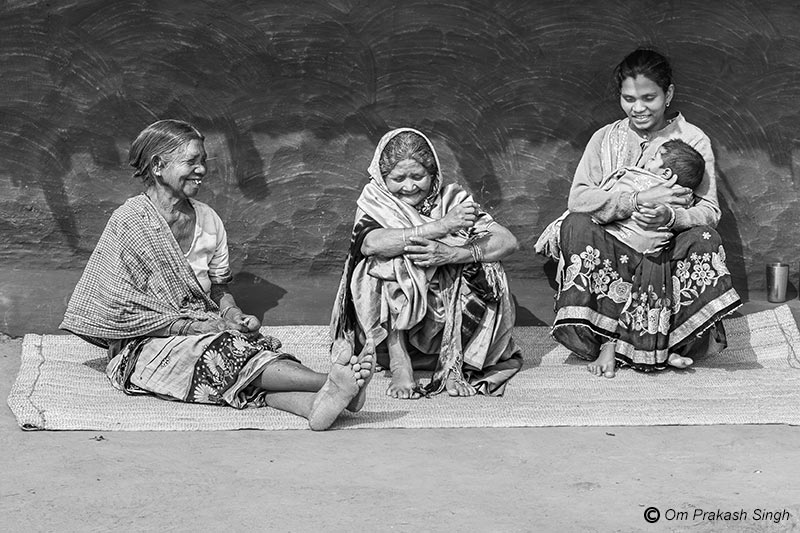
Women in a JJM-benefited neighborhood enjoying leisure time together in Latehar district
This scene illustrates a meaningful transition in the daily lives of women following improved access to safe and reliable household water through JJM. With reduced time and effort spent on water collection, women can now engage in leisure and strengthen social interactions in the community. Strengthened social interactions increase bonding, building the trust, shared norms, and reciprocal relationships that form the foundation of social capital. In the JJM context, these dynamics help equip communities with the collective agency and resilience needed to sustain JJM schemes as community assets.
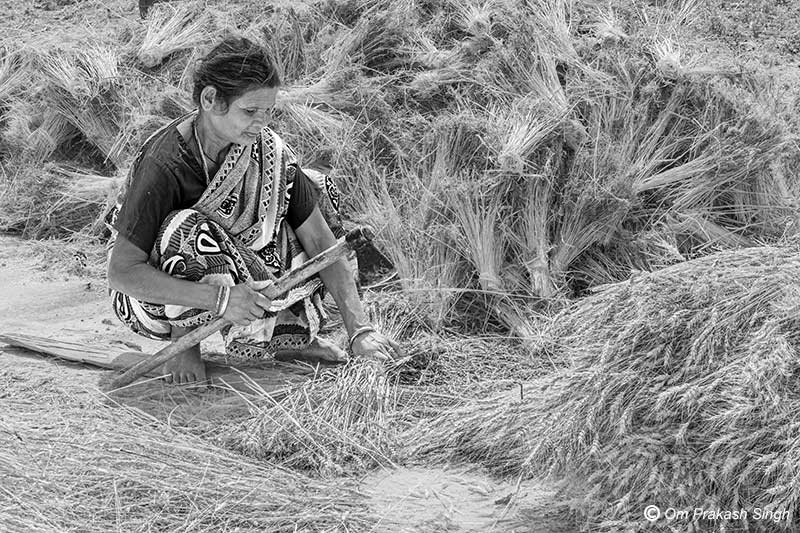
A rural woman engaged in post-harvest agricultural work in Latehar district
Improved in-house water access under JJM reduces the time use burden associated with domestic water collection, increasing predictability and operational efficiency in women’s daily routines. This time saving effect enables rural women to participate more consistently in agriculture and other income-generating and micro-enterprise work, strengthening their contribution to household earnings and local markets. This strengthens their contribution to household income and improves their visibility in community level economic processes. Collectively, these shifts advance policy objectives related to women’s economic empowerment, livelihood diversification, and inclusive rural development.
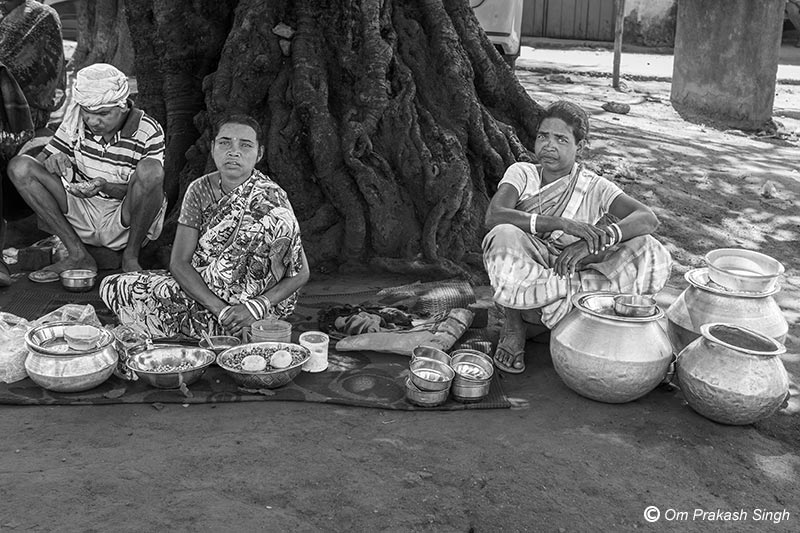
Women vendors selling locally prepared food items in a village market in Khunti district
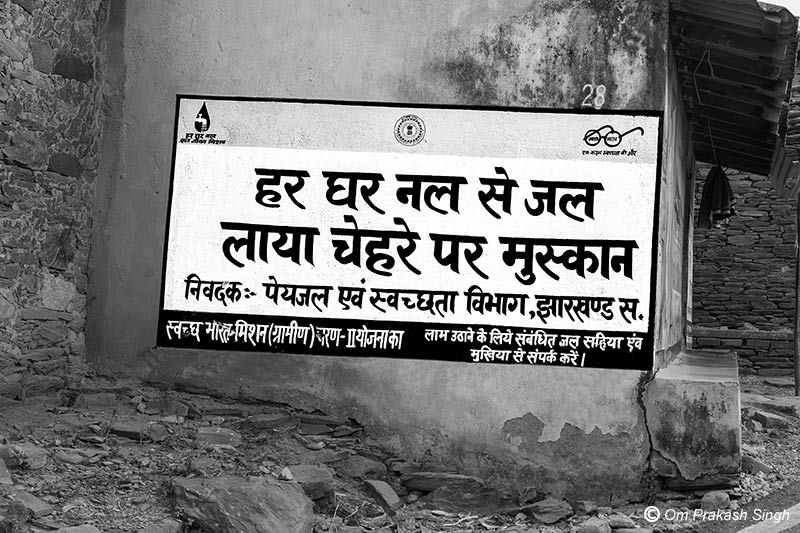
A billboard illustrating the overall outcome of JJM for rural communities in Khunti district
The cumulative impact of JJM spreads across rural communities, routed through the women. This billboard summarizes the long-term positive impact of the program, stating that “JJM tap water supply in every household brings smile on the faces”.
The Jal Jeevan Mission represents far more than an infrastructure program — in Jharkhand, it is emerging as a quiet but profound force for gender transformation. Analyzing the program through a gender lens yields several key observations. First, placing women at the center of JJM puts them in a win-win situation: they are not only passive beneficiaries but active leaders — sitting on water committees, monitoring water quality, pioneering innovations, and sustaining schemes through collective action. Women's equal participation in JJM governance simultaneously promotes gender empowerment and program sustainability, as their leadership through formal and informal channels enables integrating their perspectives and priorities into scheme design and operation. Second, the mandate for women's equal participation in VWSCs has opened a novel pathway for promoting women's leadership in rural development more broadly. With the Jal Sahiya as the key village-level woman functionary, and women VWSC members taking decisions jointly with men, sufficient role models exist to support empowerment at scale. Finally, JJM's gender focus has an important intergenerational dimension — girl children can learn from women leaders and groom themselves for similar roles in future.
A word of caution, however, is warranted. An empirical study conducted by the authors in March 2025 to assess the status of JJM implementation in Jharkhand found that while JJM has widely facilitated piped water access for rural women, persistent concerns remain. Gaps concerning the functioning of JJM schemes, their consequences for women and girl children, and recommendations to remedy the situation have been presented as a series in the preceding photo articles. During this study, it was observed that in many rural habitations, women have not always actively engaged in formal and informal governance processes — with significant consequences for scheme effectiveness and sustainability.
The interlinkages between water access and gender equality are neither incidental nor automatic. They require deliberate design, sustained investment, and genuine inclusion. JJM's governance architecture — encompassing VWSCs, the Jal Sahiya, and water quality monitoring — can meaningfully shift power, but only when implemented sincerely and supported long-term. There is need to strengthen women’s substantive roles in VWSCs through regular meetings, rotating leadership (between men and women), and clear role distribution. Women also need sustained, hands on capacity building to gain technical confidence. Meetings must be scheduled at accessible times and locations to ensure women can attend and speak. Reliable water services are essential, as irregular or unsafe supply discourages engagement. Encouraging women to propose practical solutions, linking them to higher level forums through exposure visits, and ensuring safe, supportive meeting spaces can further build their leadership. Finally, men need to enhance their own gender-sensitiveness, sharing domestic responsibilities and encouraging women’s engagement in water governance through formal as well as informal channels, thus helping shift community norms towards greater inclusiveness and equality.
Gender equality and empowerment are mutually intertwined, and in JJM they are linked through a means-end relationship — women's participation as the means, and equal enjoyment of program benefits as the end. Jharkhand's experience demonstrates that when women are placed at the center of water governance with genuine responsibility and voice, benefits multiply across households and generations. Realizing JJM's full potential can advance the human right to water for entire communities, making meaningful strides toward SDGs 5 and 6 — but this demands ensuring women's leadership is not just mandated on paper, but nurtured and expanded in every village, so that safe water becomes the foundation of a more equitable rural India.
%20(100x100)%20(50x50)%20(20x20).jpg)
.png)
